Stop Editing: Why the Most Persuasive Essays Know When to Quit

There is a counterintuitive truth buried inside every writing workshop, every peer-review session, and every well-meaning piece of advice about revision: at a certain point, editing stops improving your essay and begins dismantling it. For students who equate effort with quality, this idea can feel almost heretical. Yet the research on decision-making and cognitive load tells a consistent story — the more passes you take at a piece of writing, the more you introduce doubt where conviction once lived.
This is not an argument against revision. It is an argument for knowing when revision has done its job.
The Overworked Draft and the Confidence It Destroys
When students draft obsessively — cycling through four, five, or six complete rewrites — something subtle happens to the argument itself. The original claim, which may have been sharp and well-supported, begins to blur. Sentences that once moved with purpose get hedged. Qualifiers multiply. The thesis, revised so many times it no longer resembles the original insight, starts to sound like a committee wrote it.
Psychologists call this phenomenon decision fatigue, and it applies as readily to writing as it does to any other judgment-intensive task. Each revision requires the writer to make dozens of micro-decisions: Is this word better than that one? Does this paragraph belong before or after the next? Is this counterargument strong enough to include? Over time, the cognitive cost of those decisions compounds. Writers who have been inside a draft too long often cannot distinguish between what is genuinely unclear and what merely feels unfamiliar from overexposure.
The result is an essay that has been polished into vagueness — technically cleaner than the first draft, but far less alive.
What Conviction Looks Like on the Page
Professors who read hundreds of undergraduate essays each semester develop a finely calibrated sense for conviction. They can usually tell, within a few paragraphs, whether the writer believes in the argument being made. This is not a mystical judgment. It shows up in concrete textual signals: the directness of the thesis, the economy of the supporting evidence, the willingness to make a claim without hedging it into meaninglessness.
Conviction does not mean arrogance, and it certainly does not mean ignoring counterevidence. It means committing to a position clearly enough that your reader understands exactly where you stand and why. Ironically, that kind of clarity is often most visible in early drafts — before the writer has talked themselves out of it.
Students who write less frequently tend to approach the page with more deliberate intent. Because they cannot rely on sheer volume to eventually produce something usable, they are forced to think carefully before writing. The result is often a draft that requires less correction, not more, because the structure was considered before the first sentence was committed to the page.
The Diminishing Returns of the Fourth Draft
There is a useful mental model for thinking about revision: the first draft establishes what you are trying to say; the second draft clarifies how you are saying it; the third draft addresses whether the evidence actually supports the argument. By the fourth draft, most students are no longer fixing genuine problems — they are rearranging furniture in a room that is already clean.
This is not to suggest that three drafts is a universal rule. Some essays genuinely benefit from deeper revision, particularly those that involve complex research synthesis or multi-part arguments. But the principle holds: there is a point of diminishing returns, and most students blow past it without recognizing it.
One practical way to identify that point is to ask a specific question after each revision cycle: Am I fixing something that a reader would actually notice, or am I fixing something that only bothers me? If the answer is consistently the latter, the essay is probably ready.
Strategic Restraint as an Academic Skill
The ability to stop editing at the right moment is not a passive skill — it is an active one that requires developing a calibrated sense of when an argument is complete. This means learning to distinguish between productive discomfort (the feeling that a claim is not yet fully supported) and unproductive anxiety (the feeling that something must be wrong simply because the deadline is approaching).
Students who develop this skill tend to produce work that reads with authority. Their sentences do not apologize for themselves. Their arguments do not collapse inward under the weight of excessive qualification. They write as people who trust their own thinking — which, in academic writing, is precisely the quality that earns respect.
At EssayWriting EIE, we work with students at every stage of the writing process, and one of the most consistent observations our team makes is this: the students who struggle most with their final drafts are rarely those who did not revise enough. They are the ones who revised past the point where revision was doing any good.
Building the Habit of Confident Completion
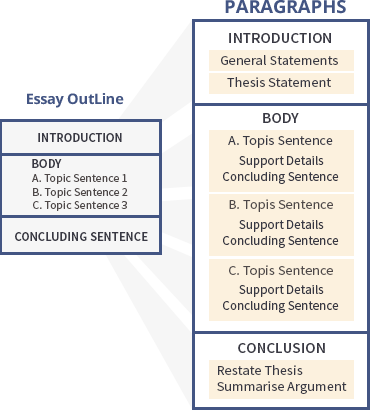
Developing restraint in revision begins with setting clearer intentions before you draft. When you know what your argument is and what evidence will support it, you are less likely to lose your footing mid-revision. Outlines, brief as they may be, serve exactly this function — they give you a fixed point to return to when excessive editing starts pulling the essay off course.
It also helps to build in a deliberate pause before the final revision pass. Returning to a draft after twenty-four hours of distance allows you to read it as a professor would — fresh, without the accumulated anxiety of the writing process. What reads as incomplete to an exhausted writer at midnight often reads as admirably precise to the same writer the following morning.
The goal is not to write less carefully. It is to write with the kind of purposeful economy that signals to your reader that you know exactly what you are doing — and that you were confident enough to stop when the work was done.