Paragraphs That Talk Past Each Other: How to Build Transitions That Actually Carry Your Argument Forward
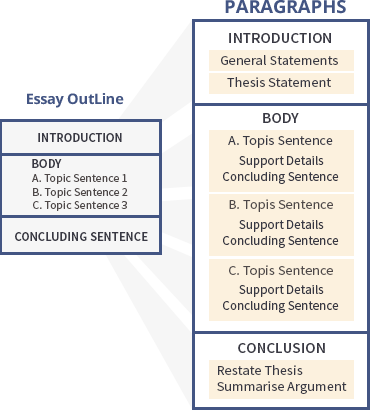
Photo: Azikahkhan, CC BY-SA 4.0, via Wikimedia Commons
Open almost any undergraduate essay and you will find the same cast of transitional phrases doing the same exhausted work. "Furthermore," "In addition," "Moreover," "Another point to consider" — these words appear at the tops of paragraphs like traffic signs on an empty road, pointing forward without explaining why the destination matters. Students who rely on them are not being lazy so much as they are misunderstanding what a transition actually is.
A transition is not a conjunction between two complete thoughts. It is evidence that those thoughts belong in the same argument at all.
Why Professors React to Weak Transitions the Way They Do
When a professor marks an essay as "disjointed" or "lacking coherence," students frequently interpret that feedback as a stylistic complaint — a suggestion to add more connecting phrases or vary sentence length. In reality, the professor is usually diagnosing something deeper: the paragraphs are not logically dependent on one another. They are sitting side by side rather than building on each other.
Cognitive scientists who study reading comprehension describe this as a failure of coherence relations — the mental links readers construct between successive units of text. When those links are absent or ambiguous, readers must supply them on their own, which increases cognitive load and undermines confidence in the writer's authority. In an academic context, that lost confidence translates directly into a lower grade.
The critical insight here is that professors do not experience a weak transition as a stylistic hiccup. They experience it as a signal that the writer has not fully worked out the relationship between two ideas. The transition, in other words, is diagnostic. It tells the reader how much the writer actually understands about the argument they are constructing.
The Cosmetic Connector Problem
The most common transitional error in student writing is what might be called the cosmetic connector — a word or phrase that creates the appearance of logical movement without doing any actual logical work.
Consider this sequence:
"Toni Morrison's use of memory in Beloved serves to destabilize linear time. Furthermore, the novel challenges dominant narratives of American history."
The word "furthermore" implies that the second sentence adds to or extends the first. But it does not explain how destabilizing linear time relates to challenging historical narrative. Is the second claim a consequence of the first? An illustration of it? A separate phenomenon that happens to coexist with it? The reader cannot tell, and neither, perhaps, can the writer.
Now consider a revision:
"Toni Morrison's use of memory in Beloved serves to destabilize linear time — and it is precisely this temporal disruption that allows the novel to challenge dominant narratives of American history, which depend on chronological coherence for their authority."
This version makes the logical relationship explicit. The reader understands not only that these two ideas are connected, but why and how they are connected. The transition is no longer cosmetic. It is load-bearing.
Cognitive Scaffolding: A Framework for Argumentative Transitions
The concept of cognitive scaffolding — borrowed from educational psychology, where it describes the structured support that helps learners internalize complex skills — applies directly to the problem of essay transitions. Just as a scaffold supports a building under construction, a well-designed transition supports the reader's ability to follow an argument through its most demanding turns.
Building that scaffold requires writers to answer three questions before drafting any transition:
1. What did the previous paragraph establish? This is not a summary. It is a precise identification of the logical claim the previous paragraph left the reader holding. If you cannot state it in one sentence, the paragraph may itself need revision.
2. What does the next paragraph need the reader to already believe? Every paragraph in an argument rests on assumptions. Some of those assumptions come from earlier in the essay. Identifying what the next paragraph requires the reader to accept helps you understand what the transition must deliver.
3. What is the specific logical relationship between these two claims? This is where most students stop too early. The relationship between paragraphs is almost never simple addition. It might be causal (the first claim produces the second), concessive (the first claim is true, but the second claim qualifies it), illustrative (the second claim demonstrates the first), or consequential (the second claim follows from the first). Naming that relationship forces precision.
Once you have answered these three questions, write the transition as a sentence — or two — that explicitly performs the logical relationship you have identified. Do not assume the reader will infer it.
The Opening Sentence Is the Transition
One practical consequence of this framework is that it repositions where transitions actually live. Many students think of transitions as the last sentence of one paragraph or a phrase at the very beginning of the next. In reality, the most powerful transitions are embedded in the topic sentence of each new paragraph.
A topic sentence that begins with "Another reason..." or "It is also important to note..." is a missed opportunity. A topic sentence that begins with "This instability is not merely formal, however — it carries direct political consequences" is doing double work: it introduces the paragraph's main claim and it specifies how that claim relates to what came before.
This approach also has a useful diagnostic function. If you find it genuinely difficult to write a topic sentence that acknowledges the previous paragraph, that difficulty is telling you something important: the two paragraphs may not belong in sequence. They may need to be reordered, or one of them may need to be restructured so that its contribution to the argument becomes clearer.
Revision as Transition Auditing
One of the most effective revision strategies for essay coherence is what might be called a transition audit. After completing a draft, go through the essay and do the following for each paragraph break:
- Write out, in plain language, the main claim of paragraph A.
- Write out the main claim of paragraph B.
- Write out the logical relationship between them.
- Check whether your actual transition makes that relationship explicit.
If the relationship you write down during the audit does not appear in the essay itself, the transition needs to be rewritten. This process often reveals that certain paragraphs are not actually arguing what the writer thought they were arguing — which is valuable information before submission, and far less valuable after.
What Strong Transitions Signal to Your Reader
Beyond their functional role in argument-building, strong transitions send a powerful signal about the writer's intellectual command of the material. When a professor reads an essay in which each paragraph explicitly justifies its position in the argument — not just its topic, but its logical role — they are reading the work of someone who has genuinely thought through a position rather than assembled evidence around a thesis.
That distinction is precisely what separates a competent essay from an impressive one. Competent essays contain good ideas. Impressive essays demonstrate that those ideas are related in ways the writer understands and controls.
Transitions are where that control becomes visible. Treat them accordingly.