Your Highlighter Is Lying to You: How Common Note-Taking Habits Hollow Out Your Essay Arguments

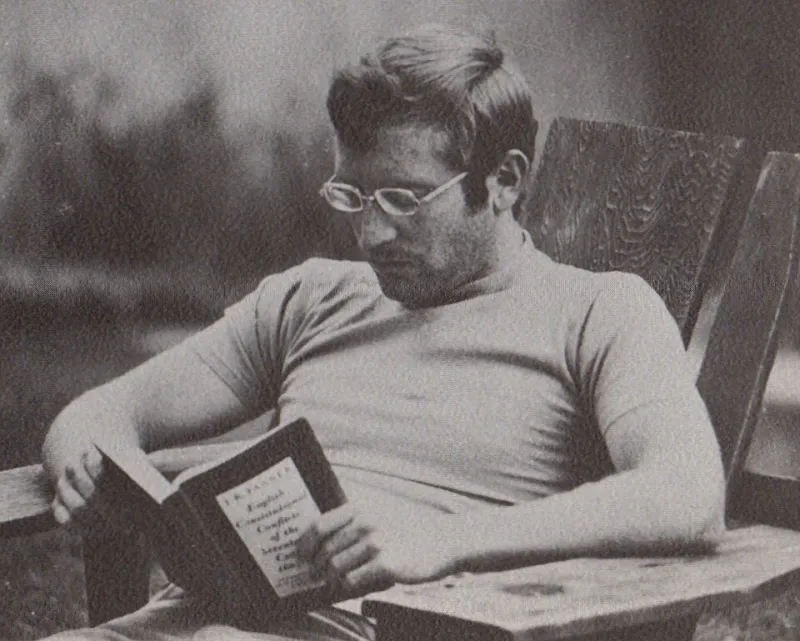
Photo: Fester Frump, CC BY-SA 4.0, via Wikimedia Commons
The Comfortable Lie of a Color-Coded Textbook
Open any college student's research materials and you'll find a familiar scene: pages streaked in yellow, pink, and green, margins crowded with asterisks and half-formed phrases, sticky notes bristling from every chapter. It looks like serious intellectual work. It feels productive. And according to a growing body of research in cognitive psychology, it may be doing your essays more harm than good.
The problem is not that highlighting and note-taking are inherently useless. The problem is that the versions most students practice — the reflexive underlining of anything that sounds important, the margin scrawl that mirrors the text rather than interrogates it — substitute the sensation of engagement for the reality of it. By the time a student sits down to draft an essay, what they have is a collection of marked passages, not a set of developed arguments. The difference between those two things is precisely what separates a forgettable essay from a compelling one.
What the Research Actually Shows
In 2013, psychologists John Dunlosky and colleagues published a landmark review in Psychological Science in the Public Interest that evaluated ten common study techniques. Highlighting and rereading — the two most popular strategies among American college students — ranked among the least effective for deep learning. The reason is straightforward: these methods are passive. They ask your brain to recognize information, not reconstruct or apply it.
Recognition is cognitively cheap. You can highlight a sentence about a scholar's argument on postcolonial identity without ever processing what that argument means, why it matters, or how it might challenge or support your own thesis. Your brain registers that the sentence seems relevant, your hand draws a line beneath it, and you move on. Hours later, you return to that highlighted passage and face the same comprehension challenge you avoided the first time — except now you're also under deadline pressure.
This is what researchers call fluency illusion: the sense of familiarity that passive re-exposure creates, which the brain misreads as genuine understanding. For essay writing, the consequences are significant. Students who rely heavily on annotation-as-recognition tend to produce essays that quote or paraphrase sources extensively without ever truly synthesizing them. The argument stalls. The citations pile up. The essay's own voice disappears beneath borrowed language.
Why the Problem Gets Worse in Essay Writing Specifically
Academic essays are not summaries. They are arguments — structured, evidence-supported claims that require a writer to take a position and defend it with precision. That task demands something annotation rarely provides: a clear sense of what a source is actually doing in relation to your argument.
When students pull highlighted passages into a draft, they typically use them in one of two ways. Either they drop in a quote and move on, treating the citation as self-explanatory evidence, or they paraphrase closely enough that the source's logic still governs the paragraph rather than their own. In both cases, the essay is being built around what the sources say rather than what the writer thinks. The argument becomes reactive rather than original.
Professors read this kind of essay constantly, and they have a name for it: source-driven writing. It is characterized by thesis statements that could apply to almost any paper on the topic, body paragraphs that summarize rather than argue, and conclusions that restate rather than resolve. None of these weaknesses stem from a lack of research. They stem from a lack of genuine intellectual engagement with that research during the reading phase.
Replacing Passive Annotation with Argument-Driven Reading
The solution is not to abandon note-taking. It is to restructure it around the demands of argumentative writing. The following techniques are drawn from research on elaborative interrogation, retrieval practice, and rhetorical reading — all of which have demonstrated stronger outcomes for deep comprehension than conventional annotation.
Read with a question, not a highlighter. Before engaging with any source, write down the specific argumentative question you need it to answer. Not "what does this article say about climate policy?" but "does this article support or complicate my claim that federal climate legislation has historically prioritized economic interests over environmental ones?" Reading with a pointed question forces your brain into evaluative mode rather than receptive mode.
Close the source before you write your notes. This is the single most effective habit shift a student can make. After reading a passage, close the book or minimize the tab and write — in your own words — what the source argued and why it matters to your essay. This technique, known as retrieval practice, forces genuine reconstruction of meaning rather than transcription. If you cannot explain the argument without looking at the text, you have not yet understood it well enough to use it.
Annotate the argument's function, not just its content. When you do write margin notes, focus on what the source is doing rhetorically. Does it provide empirical evidence? Does it define a contested term? Does it represent a counterargument you need to address? Labeling function rather than content trains you to think about sources as tools within your argument rather than material to quote.
Build a "disagreement log." One of the most underused research strategies is systematic pushback. As you read, note every claim that strikes you as incomplete, overstated, or in tension with another source you've encountered. These friction points are often where the most original and defensible thesis positions emerge. An essay that engages with the limits of its sources demonstrates analytical sophistication that straightforward synthesis rarely achieves.
The Standard Your Essay Actually Has to Meet
College professors in the United States are not grading students on how many sources they consulted. They are evaluating how well a student can construct and sustain an independent argument. That requires treating sources as interlocutors — entities whose ideas you engage, challenge, and integrate — rather than as authorities whose words you collect and display.
The student who reads three sources deeply, annotates them with argumentative purpose, and builds a thesis from genuine intellectual friction will almost always outperform the student who reads twelve sources, highlights prolifically, and assembles a draft from a mosaic of borrowed language. Depth of engagement is not a luxury reserved for graduate students. It is the foundational skill that separates competent academic writing from genuinely persuasive academic writing.
A Final Word on Honest Self-Assessment
If you finish a research session with pages of colorful annotations and feel satisfied, pause before you start drafting. Ask yourself a direct question: could you explain, without looking at your notes, what each source argues and how it connects to your thesis? If the answer is no, the highlighting was not research. It was procrastination wearing a productive disguise.
The good news is that argument-driven reading is a learnable skill, and the payoff is immediate. Essays written from genuine source comprehension have clearer theses, stronger paragraph logic, and a more confident authorial voice — because the writer actually understands what they're arguing and why. That understanding cannot be highlighted into existence. It has to be built.