EssayWriting EIE Expert Academic Writing, Delivered with Precision

EssayWriting EIE

Expert Academic Writing, Delivered with Precision

Latest Articles

Seven Days, One Essay: A Backward-Built Schedule for the Serial Postponers
Academic Integrity

Seven Days, One Essay: A Backward-Built Schedule for the Serial Postponers

Reverse-planning an essay from the due date isn't just time management — it's a safeguard against the rushed, source-thin work that puts academic standing at risk. This week-by-week workback schedule covers 2-week, 1-week, and 48-hour timelines.


The Invisible Invoice: What Every Hour of Avoidance Actually Charges Your Essay
Writing Techniques

The Invisible Invoice: What Every Hour of Avoidance Actually Charges Your Essay

Re-reading sources, refining outlines, and polishing titles often feel like productivity — but they're frequently the most expensive form of procrastination. Here's how to recognize the avoidance tax and start drafting before you feel ready.

Steal the Architecture, Not the Argument: Reading Published Essays as Blueprints
Writing Techniques

Steal the Architecture, Not the Argument: Reading Published Essays as Blueprints

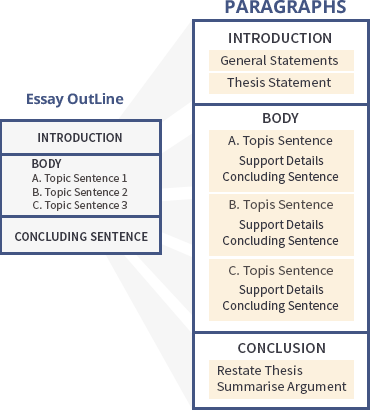
Most students read academic essays for what they say and ignore how they're built. Learning to reverse-engineer a published writer's structural moves — openings, evidence placement, concessions — can transform your own drafts without ever borrowing an idea.

Writing for an Audience of One: Why Guessing What Your Professor Wants Is the Wrong Strategy
Writing Techniques

Writing for an Audience of One: Why Guessing What Your Professor Wants Is the Wrong Strategy

Students who write to satisfy an imagined version of their professor's preferences often produce essays that are technically compliant but intellectually hollow. Understanding why academic conventions exist — rather than simply what they require — transforms those standards from obstacles into instruments of genuine persuasion. This piece challenges the anxiety-driven approach to academic writing and replaces it with something more effective.

How to Study a Published Argument Without Letting It Take Over Your Own
Academic Integrity

How to Study a Published Argument Without Letting It Take Over Your Own

Learning from strong academic writing is essential, but absorbing it passively is one of the fastest ways to lose your own intellectual voice. This article offers a deliberate analytical framework for deconstructing how published writers build arguments, handle counterarguments, and deploy evidence — all while keeping your perspective firmly in the driver's seat.

Stop Editing: Why the Most Persuasive Essays Know When to Quit
Writing Techniques

Stop Editing: Why the Most Persuasive Essays Know When to Quit

Excessive revision often does more damage than a rough first draft ever could. This article examines how strategic restraint—knowing precisely when to set down the red pen—builds the argumentative conviction that professors find most compelling. Precision writing, it turns out, is an act of confidence, not perfectionism.

Paragraphs That Talk Past Each Other: How to Build Transitions That Actually Carry Your Argument Forward
Writing Techniques

Paragraphs That Talk Past Each Other: How to Build Transitions That Actually Carry Your Argument Forward

Most students treat transitional phrases as decorative bridges between paragraphs, but cognitive science tells a more demanding story. Weak transitions don't just interrupt flow — they reveal gaps in your underlying reasoning that professors are trained to notice. This article offers a practical framework for constructing transitions that do real argumentative work.

When Better Words Make Worse Essays: The Hidden Cost of Chasing Perfect Diction
Writing Techniques

When Better Words Make Worse Essays: The Hidden Cost of Chasing Perfect Diction

Many students believe that academic excellence lives in the thesaurus — that the right word, found after enough searching, will elevate an ordinary sentence into something remarkable. What cognitive science and experienced writing instructors actually reveal is more counterintuitive: the relentless pursuit of perfect word choice frequently produces weaker, not stronger, academic writing.

You Know What You Mean — But Can You Prove It? Building the Argumentative Resilience Your Essays Are Missing
Writing Techniques

You Know What You Mean — But Can You Prove It? Building the Argumentative Resilience Your Essays Are Missing

Understanding your essay's central argument is only half the battle. The real test arrives when you must defend that argument against scrutiny — from a professor, a peer reviewer, or your own wavering confidence mid-draft. This article examines why argumentative resilience is the skill that separates truly compelling academic essays from those that merely appear competent.

Freedom Through Limits: The Cognitive Case for Embracing Academic Constraints
Writing Techniques

Freedom Through Limits: The Cognitive Case for Embracing Academic Constraints

Most students experience word limits and structural requirements as obstacles standing between them and their best writing. Research in cognitive science suggests the opposite is true — that well-designed constraints are precisely the conditions under which rigorous, original academic writing tends to emerge.

When Simple Isn't Smart: How Oversimplified Writing Signals Shallow Thinking to Your Professors
Writing Techniques

When Simple Isn't Smart: How Oversimplified Writing Signals Shallow Thinking to Your Professors

Many students believe that clear, straightforward prose is always the safest path to a strong grade — but professors often read simplicity as intellectual timidity. This article unpacks the counterintuitive relationship between linguistic complexity and academic credibility, showing you how to write with genuine sophistication without sacrificing comprehension.

Model Essays, Borrowed Minds: How Studying Others' Writing Can Quietly Erase Your Own
Writing Techniques

Model Essays, Borrowed Minds: How Studying Others' Writing Can Quietly Erase Your Own

Studying exemplary essays seems like a logical path to improvement, but the practice carries a hidden risk: the more closely you absorb another writer's structure and voice, the further you may drift from your own. This article examines the psychological mechanisms behind imitative writing and offers research-backed strategies for learning from model essays without surrendering your intellectual identity.

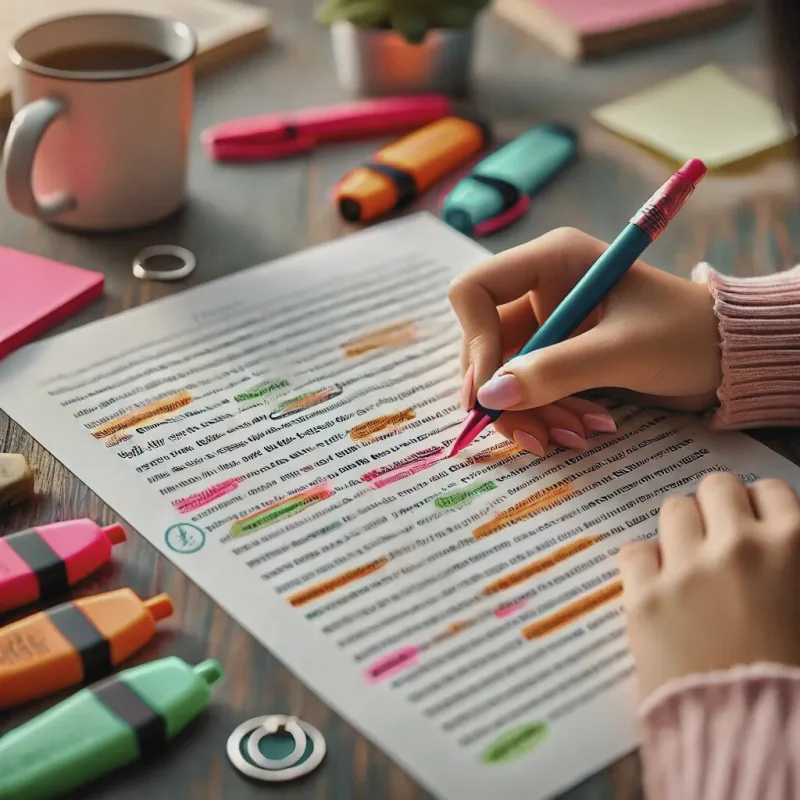
Your Highlighter Is Lying to You: How Common Note-Taking Habits Hollow Out Your Essay Arguments
Writing Techniques

Your Highlighter Is Lying to You: How Common Note-Taking Habits Hollow Out Your Essay Arguments

Most students treat highlighting and margin notes as signs of diligent research — but cognitive science suggests these habits often create the illusion of understanding without the substance. Discover why your annotation instincts may be quietly undermining your essay arguments, and learn what genuine source engagement actually looks like.

Punctuation Paralysis: How Grammar Anxiety Is Quietly Undermining Your Academic Voice
Writing Techniques

Punctuation Paralysis: How Grammar Anxiety Is Quietly Undermining Your Academic Voice

For many college students, uncertainty about punctuation rules doesn't just produce mechanical errors — it erodes the confidence needed to argue persuasively on the page. This article examines the psychological dimension of grammatical self-doubt and offers practical strategies for reclaiming your writing authority without getting lost in the weeds of comma placement.

Why Professor Feedback Rarely Makes You a Better Writer — And What to Do Instead
Writing Techniques

Why Professor Feedback Rarely Makes You a Better Writer — And What to Do Instead

Most students collect graded essays, glance at the comments, and move on — never realizing that the feedback cycle itself may be working against their development. Cognitive science reveals why vague marginal notes fail to produce lasting writing improvement, and a structured revision framework can change that entirely.

Marked Up, Thought Down: How Passive Annotation Is Quietly Undermining Your Essays
Writing Techniques

Marked Up, Thought Down: How Passive Annotation Is Quietly Undermining Your Essays

Highlighters and margin notes feel productive, but most students use them in ways that accumulate information rather than build arguments. Discover how a more deliberate approach to annotating sources can transform the way you construct and defend your academic claims.

Cited but Not Convincing: How to Close the Gap Between Sources and Arguments
Writing Techniques

Cited but Not Convincing: How to Close the Gap Between Sources and Arguments

Formatting a citation correctly is only half the battle. Many students unknowingly treat sources as checkboxes rather than as intellectual building blocks, leaving their arguments structurally hollow despite technically proper documentation. This article breaks down why evidence often fails to persuade and offers concrete strategies for making every citation do meaningful argumentative work.

When Your Thesis Betrays You: Diagnosing and Repairing Argumentative Drift Before Submission
Writing Techniques

When Your Thesis Betrays You: Diagnosing and Repairing Argumentative Drift Before Submission

A strong thesis statement is only as valuable as the essay that follows it. Many students discover too late that their central argument quietly unravels between the introduction and the conclusion, leaving readers with a fragmented and unconvincing piece. This article examines why argumentative drift occurs, how to detect it in your own writing, and what revision strategies can restore coherence before your deadline arrives.

Your Strongest Argument Is Hiding — Here's How to Find It Before You Write
Writing Techniques

Your Strongest Argument Is Hiding — Here's How to Find It Before You Write

Most students unknowingly bury their most compelling ideas deep inside their essays, leaving a weaker claim to carry the weight of the entire paper. This article examines why this pattern emerges, how to diagnose it in your own writing, and how a reverse-outlining strategy can help you surface your real argument before you write a single draft.

The Reverse-Engineered Essay: How Cognitive Science Exposes the True Cost of Writing at the Last Minute
Writing Techniques

The Reverse-Engineered Essay: How Cognitive Science Exposes the True Cost of Writing at the Last Minute

Last-minute essay writing is not simply a bad habit — it is a direct conflict with how the human brain processes and consolidates complex information. Drawing on research in cognitive psychology and learning science, this guide presents a structured, milestone-based writing timeline that produces measurably stronger essays. Students who understand the neuroscience behind their writing process gain a strategic advantage that no amount of caffeine-fueled cramming can replicate.